Sleep foundations · Bedding
How Adjustable Beds Change Sheet Fit, Pillow Support, and Nighttime Comfort
An adjustable bed can turn a familiar mattress into a more flexible place to rest, read, or unwind. But when the head or foot rises, the bedding moves too. A sheet that once stayed smooth may pull at the corners; a pillow that felt just right when flat may no longer meet the head and neck at the same angle. Thoughtful setup is less about finding a perfect universal formula and more about noticing how each part of the bed behaves in the positions you actually use.
Here is a practical guide to fitted-sheet stability, pillow placement, and small adjustments that can make an adjustable bed feel considered and comfortable—whether you sleep with the base flat, raise the head slightly, or shift positions through the night.
The bed changes shape; the bedding responds
An adjustable base changes the angle of the mattress, usually by lifting the head, the feet, or both. As the mattress bends at its joints, the surface is no longer a single flat plane. Fabric that lies neatly across a flat mattress can be drawn toward the hinge points or pulled diagonally as the base moves. The amount of movement depends on the bed’s design, mattress construction, how far the sections are raised, and how securely each layer is fitted.
This does not mean that bedding must be constantly rearranged or that every adjustable bed needs specialty linens. It does mean that fit deserves a little more attention. A fitted sheet must accommodate both the mattress’s height and its motion. A pillow has to support the head in the chosen position rather than simply recreate the feel of a flat bed. And blankets, toppers, and protectors can add friction, weight, or bulk that influences how smoothly everything moves.
Think of the bed as a small system: mattress, base, protector, sheet, pillow, and comforter all interact. A change in one layer may be felt elsewhere. The most useful approach is to test the complete setup, one adjustment at a time, instead of trying to solve every comfort question with a new purchase.
Fitted sheets: depth, stretch, and staying power
Start with the mattress itself. Measure its length, width, and depth, including any permanent pillow-top or built-in cushioning. If a mattress protector or topper adds height, include that layer when considering how much fabric the fitted sheet needs to cover. A sheet that is too shallow may pull away from a corner when the mattress bends; one that is excessively deep can leave loose fabric beneath the mattress, where it may gather or shift.
Look for product specifications that clearly state pocket depth and mattress compatibility. For example, some sheet sets are designed with pockets for mattresses up to 18 inches deep. That figure can be a useful starting point, but it is not a guarantee of fit for every bed: the combined height of mattress and accessories, the shape of the corners, and the base’s movement all matter. Check the sheet maker’s guidance and compare it with your own measurements before deciding.
Elastic construction is another detail worth checking. A fitted sheet with elastic around the full perimeter may feel more secure than one with elastic only at the corners, though the best choice depends on the sheet’s pattern and the mattress. Reinforced elastic and sturdy stitching can help a sheet maintain its hold through repeated use and washing. A fitted sheet should feel taut enough to stay in place, but not so tight that it strains at the seams when the bed rises.
Fabric has a role, too. Crisp percale, smooth sateen, and relaxed linen each feel different against the skin and may behave differently as the bed articulates. The weave does not replace correct sizing, but it can affect the surface feel and how much the fabric slides against other layers. If a sheet repeatedly creeps upward, inspect the entire combination: a slick protector underneath, extra depth, or a heavy topper may contribute as much as the sheet itself.
Before making a change, raise and lower the bed slowly while watching the corners and center of the mattress. If the sheet pulls noticeably, stop and check that it is seated evenly around the mattress. Keep the fabric clear of moving parts and follow the adjustable-base manufacturer’s safety instructions. Do not tuck loose material beneath the mechanism or attempt to restrain the mattress with improvised straps that could interfere with movement.
A simple sheet-fit test
It is easier to spot a fit issue when you test deliberately rather than discovering it in the middle of the night. Begin with the bed flat and smooth the fitted sheet from the center toward each corner. Check that the seams sit where expected and that the sheet’s elastic is not twisted or stretched unusually tight. Then raise the head section to a comfortable reading or resting angle, pause, and look for tension, wrinkles, or corners beginning to lift.
Next, return the bed to flat and test the foot section if you use that position. Finally, try the combination of head and foot elevation that is part of your usual routine. The mattress may move differently under a person’s weight than it does when empty, so if it is safe and practical, assess the setup while lying in your normal position as well.
- Notice the corners: Do they remain anchored, or does one begin to slip as the mattress bends?
- Watch the hinge area: Does fabric bunch where the mattress changes angle?
- Check the surface: Are folds forming beneath your shoulder, hip, or legs?
- Listen and feel: Does the sheet or protector tug, rub, or make the bed feel less settled?
- Repeat after washing: Fabric can shrink or relax over time, so a once-reliable fit may change.
Make only one adjustment at a time. Re-seat the fitted sheet, test again, and then consider whether the protector or another layer is contributing to the movement. This method helps distinguish a sizing issue from a layering issue without turning the whole bed into a project.
Pillow support is position-dependent
A pillow’s job is not simply to feel soft. It should help keep the head and neck comfortably supported in relation to the rest of the body. When the head of an adjustable bed rises, the angle between the upper body and mattress changes. The head may rest differently, the shoulders may settle into a new position, and a pillow that suited a flat posture may feel too tall, too low, or inclined to slide.
Begin by choosing a bed angle that feels natural, then place the pillow where the head and neck actually rest in that position. Avoid stacking pillows automatically just because the mattress has been raised. Extra height can push the chin toward the chest or make the head feel unsupported, depending on the person and posture. Conversely, a pillow that compresses substantially may not offer the same support once the upper body is elevated.
Side sleepers often need enough loft to fill the space between the head and mattress without lifting the neck sharply. Back sleepers may prefer a lower profile, though individual shoulder shape, mattress feel, and pillow fill all affect what feels comfortable. If you shift between positions, take time to test more than one posture. A pillow can be agreeable for reading but less suitable for falling asleep, or vice versa.
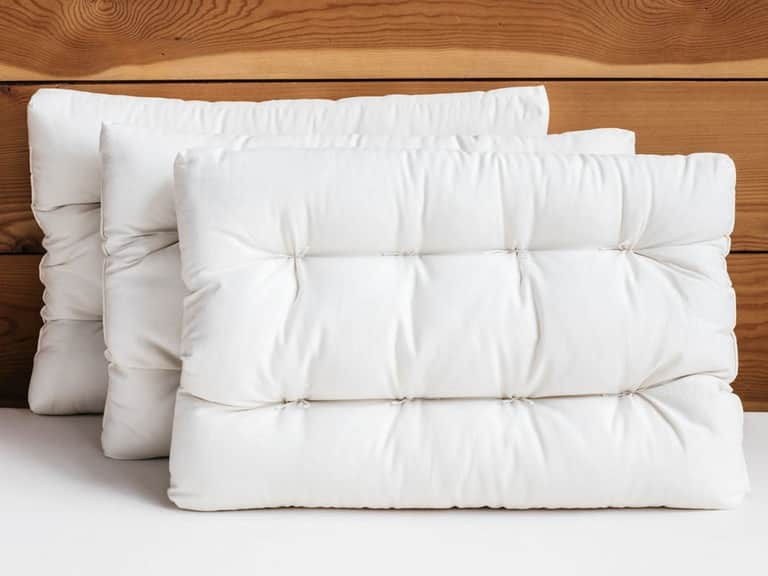
Fill influences the experience. A lofty down pillow gently compresses under the head, creating a softer, yielding feel; an adjustable or more structured pillow may hold its shape differently. If you prefer a light, compressible feel, the Down Pillow combines double-washed down with a down-proof organic cotton shell. Its soft support may suit people who enjoy a pillow that settles around the head, though the right choice still depends on sleeping position and personal comfort.
For people who want a more defined shape, the All-Natural Orthopedic Neck Pillow has a flat head surface and differently filled neck bolsters. It is designed to offer options for neck support, but a shaped pillow is not automatically suitable for every sleeper or every adjustable-bed angle. Try it in the position you intend to use, and follow any care instructions for the materials.
In either case, treat product descriptions as a guide to construction rather than a promise of a medical outcome. A pillow may change how supported you feel, but it does not diagnose or treat a health condition. If a particular position causes persistent pain, numbness, headaches, or disrupted sleep, discuss the concern with a qualified healthcare professional.
Where the pillow sits matters
On a flat bed, pillows often remain near the headboard by habit. With an adjustable base, the head section may move forward as it rises, and the body may settle down the mattress slightly. The pillow can drift, leaving a gap behind the head or placing the neck at an awkward angle. This is especially noticeable when the bed is raised steeply, but even modest elevation can change where the head naturally rests.
After choosing a setting, pause and reposition the pillow so its supportive area is beneath the head and neck—not bunched behind the shoulders or pushed high against the headboard. If the pillow slides, look for the source before adding more layers. A smooth pillowcase, an angled mattress surface, or the movement of the upper body may all play a part. A pillow protector can help with care and hygiene, but its texture may also alter how the pillow moves against the sheet.
Body pillows can provide a useful point of contact for some sleepers, particularly when a person enjoys hugging a pillow or placing one between the knees. Their long shape can also shift as the base articulates, so consider whether the pillow stays where you need it without obstructing the mattress’s movement. There is no requirement to use one; it is simply another comfort option to test.
Layers, blankets, and the feeling of the bed
Sheet fit is only one part of nighttime comfort. A mattress protector may guard against spills and everyday wear, while a topper can change the feel and height of the sleep surface. Each added layer affects the total depth that the fitted sheet must cover. A protector that is too loose may wrinkle; one that is too tight can pull against the sheet. If a topper is used, confirm that it is suitable for an adjustable base and can flex as the mattress changes shape.
Comforters and duvets also respond to movement. As the mattress rises, a cover may fall toward the foot or gather near the waist. A lighter cover can feel less cumbersome, while a heavier one may stay put but tug at the body as the bed moves. These are matters of preference, not rules. Try the bed with your usual sleep layers and make sure the cover does not become trapped in the base.
Temperature comfort remains personal and can be influenced by bedding fibers, room conditions, clothing, and individual differences. If you wake feeling too warm or too cool, observe the whole arrangement rather than assuming the adjustable angle is the sole cause. A breathable sheet, a lighter cover, or a change in the number of layers may be worth testing, but comfort is not guaranteed by any one material or product.
Create a routine for testing comfort
Adjustable beds invite experimentation, but a succession of dramatic changes can make it difficult to tell what is working. A calmer approach is to keep a short record for several nights. Note the head and foot settings you used, whether the sheet shifted, where the pillow ended up, and how the bed felt when you woke. You do not need technical measurements; a few observations can reveal patterns.
- Begin with a baseline. Test your usual flat or near-flat setup with the bedding neatly fitted.
- Change one position. Raise the head a little, then pause to assess pillow support and sheet tension.
- Try your real routine. Use the angle you would choose for reading, resting, or sleep rather than an extreme position you rarely use.
- Reposition the pillow. Place it under your head and neck after the mattress has moved, not before.
- Check the bedding in the morning. Look for repeated bunching, loosened corners, or a shifted protector.
- Make a modest correction. Adjust the sheet fit, pillow placement, or a single layer, then observe again.
Comfort may vary from night to night. A position that feels pleasant during a brief rest may not be the one you prefer for a full night. Give yourself room to change settings and avoid treating one unsuccessful trial as proof that the bed—or your bedding—cannot work for you.
Common signs that something needs attention
Small wrinkles are not necessarily a problem, but repeated slipping, strong pulling, or persistent discomfort deserves a closer look. If a fitted sheet pops off during ordinary movement, recheck its dimensions against the complete mattress setup. If the corners stay put but fabric gathers under the body, the sheet or an underlying layer may be too loose or slippery. If the mattress itself shifts on the base, consult the adjustable-bed manufacturer’s instructions rather than trying to secure it with an improvised solution.
For pillow discomfort, notice whether the problem begins when the bed angle changes or whether it occurs in every position. A pillow that feels too high may benefit from a different loft or shape; one that collapses may call for a more supportive construction. Take care not to interpret discomfort as a simple bedding issue when it persists, worsens, or comes with other symptoms. A qualified clinician can help assess ongoing sleep or pain concerns.
Always keep the area around the base’s moving parts clear. Follow the manual for safe operation, weight limits, mattress compatibility, and maintenance. If you hear unusual noises, see the mattress or base behaving unexpectedly, or find bedding caught in the mechanism, stop adjusting it and consult the manufacturer’s guidance.
A better fit is the one that works for your night
An adjustable bed can make it easier to change the feel of a bedroom from one moment to the next. Its comfort, though, depends on more than the base itself. Correctly sized fitted sheets, elastic that holds without strain, thoughtful pillow placement, and bedding layers that move freely all contribute to a bed that feels composed rather than fussy.
Measure the mattress and its added layers. Test sheets through the positions you actually use. Reposition your pillow after the bed moves, and pay attention to whether its loft and fill still feel supportive. Make small changes, give them time, and let your own comfort guide the process. There is no single sheet, pillow, or angle that suits everyone—and no need for a complicated setup if a simple one feels good.
Sleep comfort is individual and can change with position, preference, and circumstances. This article is for general educational purposes, not medical advice. For persistent pain, ongoing sleep problems, or concerns about a health condition, speak with a qualified healthcare professional.