Pillow fit, thoughtfully considered
Pillow Loft and Sleeping Position: A Practical Guide to Finding the Right Fit
The right pillow is less about chasing a perfect number and more about finding a comfortable height that lets your head and neck rest naturally. Sleeping position, mattress feel, pillow fill and personal preference all shape that equation.
A practical guide to loft, support and choosing between adjustable-fill and shaped pillows.
A pillow can look plush on the bed and feel inviting when you first lie down, yet still be the wrong fit for the way you sleep. That is because appearance alone says little about the height your head actually rests at once the pillow is compressed beneath it. In bedding terms, that effective height is called loft.
Loft matters because a pillow is part of the support system between your head, neck, shoulders and mattress. Its job is not to force the body into a rigid pose, but to fill the space between the head and the sleep surface comfortably. The shape of that space changes with sleeping position. A side sleeper, for instance, usually has a larger gap between the ear and mattress than a stomach sleeper does.
There is no universal pillow height that suits everyone. Body proportions, shoulder width, mattress softness, pillow material and the way someone moves overnight can all influence the result. The most useful approach is to treat loft as a personal fit question: does the pillow feel comfortable, and does your head rest without being tipped noticeably up, down or to one side?
This guide explains how to think about pillow loft across common sleeping positions, how adjustable-fill and shaped designs differ, and what to check when comparing pillows such as the Naturepedic Organic Side Sleeper Pillow. These are practical comfort considerations, not guarantees of pain relief or treatment for a medical condition.
What pillow loft means in everyday terms
Loft is often described as a pillow’s height, but the useful measurement is not necessarily how tall it looks on a shelf. A soft pillow may begin with a generous profile and compress considerably beneath the head. A more resilient fill may yield less, holding a more consistent height under pressure. In other words, the feel and construction of the pillow help determine its loft under load.
Firmness and loft are related, but they are not interchangeable. Loft describes height; firmness describes how readily the pillow compresses. A pillow can be high and soft, low and firm, or somewhere between. A lofty pillow that compresses deeply may leave the head lower than expected. A firmer pillow with a modest profile may keep the head more elevated.
When comparing options, consider both the pillow’s uncompressed shape and how it behaves when you settle into it. If you can, try it in your usual sleeping position. Notice whether the fill shifts away from the area that needs support, whether the pillow rebounds when you move, and whether its height still feels comfortable after several minutes.
- Low loft generally means a shorter profile, which may suit people who need less height beneath the head.
- Medium loft provides a middle-ground profile, though its actual feel will vary with fill and construction.
- High loft offers more initial height and may help fill a larger gap, but can feel excessive if it pushes the head out of a comfortable position.
Why sleeping position changes the fit
Your sleeping position changes the distance between your head and the mattress. That distance is only one factor, but it gives you a useful starting point. A pillow that feels comfortable on your back may not provide the same support on your side, and a pillow that suits one position may feel too tall or bulky when you roll into another.
Side sleeping
Side sleepers typically need a pillow with enough effective loft to fill the space between the side of the head and the mattress. The right amount depends on shoulder width, how deeply the shoulder settles into the mattress and the firmness of the sleep surface. A pillow that is too low may leave the head angled down toward the mattress; one that is too high may tilt it upward.
Rather than relying on a label such as “side sleeper” alone, notice the relationship between your head and the rest of your body. Aim for a relaxed, neutral-feeling position, without an obvious bend at the neck. A mattress that lets the shoulder sink more deeply may change how much pillow height feels comfortable. The same sleeper may therefore prefer a different profile on a softer mattress than on a firmer one.
Some side-sleeper pillows have a shaped edge or an elongated design intended to support the head, neck or arm. Others use adjustable fill, so you can modify the amount of material inside. The Naturepedic Organic Side Sleeper Pillow, for example, is described as a contoured option with shredded latex fill and an organic cotton cover. Its interior can be accessed to adjust loft, making it a possible option for someone who wants to fine-tune the amount of fill rather than choose a fixed profile.
Back sleeping
Back sleepers often look for a pillow that supports the natural curve of the neck without lifting the head too far forward. A profile that is too high may make the chin feel pushed toward the chest; a profile that is too low may feel as though the head has insufficient cushioning. These are general fit cues, not a prescribed posture or a promise that a particular pillow will resolve discomfort.
Some back sleepers prefer a gently contoured pillow with a central area for the head and a shaped edge near the neck. Others find a conventional, adjustable pillow easier to personalize. The decision often comes down to whether you like a defined shape that stays consistent or a softer arrangement that can be moved and reshaped.
Stomach sleeping
Stomach sleepers generally have less space between the head and mattress than side sleepers do. A thick or highly structured pillow may feel as though it raises the head more than is comfortable. Some people who sleep on their stomach prefer a low-profile pillow, while others prefer little or no pillow beneath the head. Comfort and individual needs vary, so it is worth paying attention to how a pillow feels rather than assuming a position dictates one exact style.
If you rotate between stomach and side sleeping, choosing a pillow may be more complicated. A single fixed profile can feel different as you move. Adjustable fill can be useful for experimentation, but the best answer is still the one that feels workable across the positions you actually use.
Adjustable-fill pillows: a more personal setting
An adjustable pillow lets you add, remove or rearrange fill to change its height and feel. This can be appealing when you are unsure which loft suits you, when your preferred position varies, or when a pillow’s original profile feels close but not quite right. Instead of treating a pillow as a fixed object, you can make gradual adjustments and observe how each change affects comfort.
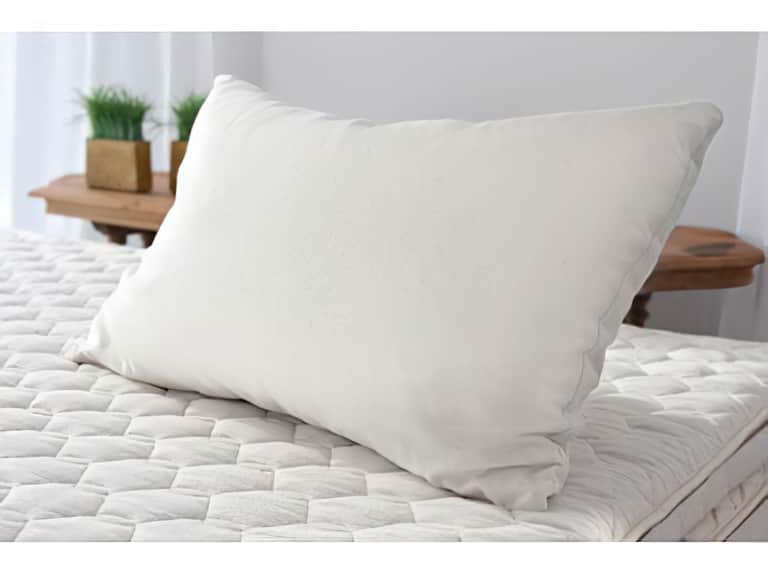
The Naturepedic Organic Side Sleeper Pillow is one example: it uses shredded latex fill and offers access to the interior for loft adjustment. Other adjustable designs use different materials. The available bedding selection includes the Savvy Rest Wool Pillow, which is described as overfilled and customizable by removing fill. Its wool construction offers a different feel from shredded latex, so the ability to adjust height is just one part of the comparison.
Adjustable designs are not automatically the right choice for every sleeper. They require a little trial and error, and the fill may need to be redistributed or removed thoughtfully to avoid uneven areas. Some materials and covers also have specific care instructions. Check the manufacturer’s guidance before washing or exposing a pillow to sunlight, heat or moisture.
A measured process is more useful than making dramatic changes all at once:
- Start with the pillow at its supplied fill level and try it in your usual position.
- If the profile feels too high or too low, make a small adjustment rather than removing a large amount of fill immediately.
- Keep the fill you remove in a clean, dry place if the product instructions allow it, so you can restore some later.
- Give the changed pillow a few nights of ordinary use, while noting comfort in different positions.
- Reassess if the pillow becomes uneven, lumpy or difficult to keep in a comfortable shape.
Changing one feature at a time makes it easier to understand what is helping. It also reduces the temptation to judge a pillow from a brief first impression, when a new fill or unfamiliar shape may feel different from what you are accustomed to.
Shaped pillows: support with a defined silhouette
Shaped pillows are designed around a particular contour or sleeping experience. A molded pillow may have a higher and lower edge, a hollow for the head or a curved surface intended to cradle the neck. The defining advantage is consistency: the shape gives you a clear place to rest. The trade-off is that the fixed profile offers less freedom to change height than a pillow with removable fill.
For some sleepers, a shaped design feels intuitive once the correct side is positioned beneath the head. For others, the contour may feel restrictive, particularly if they turn often or switch between side and back sleeping. Before settling on one, consider whether you like to reposition your pillow during the night and whether its shape accommodates your usual movements.
A shaped pillow should not be assumed to correct posture or treat a health concern. Product language can describe intended support, but personal comfort is not the same as a clinical outcome. If a pillow consistently feels uncomfortable, creates pressure or seems to worsen symptoms, discontinue using it and consider asking a qualified healthcare professional for guidance.
Material matters: the feel beneath the loft
Two pillows with similar profiles can feel very different because their fills respond differently to weight, movement and heat. Material is therefore part of the pillow-loft question, not a separate detail. The right height may still feel wrong if the pillow collapses quickly, resists movement or does not suit your preferred surface feel.
- Shredded latex is used in adjustable pillows and can be shifted or redistributed. It is often selected for a responsive feel, but the experience depends on the pillow’s construction and the sleeper’s preferences.
- Wool fill has a distinct, cushioned feel and can be adjusted in some pillows by removing material. Care requirements vary, so check the product instructions.
- Down tends to feel soft and compressible. A low-profile design may appeal to sleepers who want a more yielding pillow, although feel and support depend on its construction.
- Foam can be shaped or layered to create a defined support profile. Consider whether you prefer a pillow that holds a particular form or one that can be reshaped.
Materials can also affect practical considerations such as care, allergies, sourcing preferences and durability. Read the product details for information about the fill, cover, washing instructions and any stated certifications. A material’s natural origin or specialized feature does not, by itself, guarantee better sleep or a healthier outcome for every person.
A simple pillow-fit check
There is no need to turn pillow shopping into a complicated measurement exercise. A few quiet checks can help you compare options more clearly. Try to assess the pillow in your ordinary sleeping position, with the mattress and other bedding you normally use.
- Notice the angle. Does your head feel tipped markedly toward the mattress or lifted away from it?
- Check the shoulder gap. When side sleeping, does the pillow feel as though it fills the space between your head and the mattress without forcing your shoulder into an awkward position?
- Consider compression. Does the pillow flatten quickly, or does it retain more height than feels comfortable?
- Move naturally. If you change position, does the pillow remain usable, or do you need to reshape it each time?
- Look beyond the first minute. A brief test can reveal an obvious mismatch, but a familiar, comfortable feel may take longer to evaluate.
These checks are prompts, not diagnostic tests. They can help you describe what you like—more height, less resistance, a softer surface, a stable contour—when deciding what to try next. A pillow that feels comfortable and supportive to you is a more meaningful choice than one selected solely because it is marketed for a particular position.
Common pillow-loft misconceptions
“Higher means more supportive.”
Not necessarily. A high pillow may compress substantially, and a low pillow may feel firm and stable. Support depends on how a pillow responds under the head and whether its effective height feels comfortable in your sleeping position.
“Side sleepers always need the tallest pillow.”
Side sleepers often need enough loft to fill the space created by the shoulder, but the amount varies with body proportions, mattress firmness and pillow compression. A universal rule cannot account for every sleeper.
“An adjustable pillow can be tuned to solve any problem.”
Adjustability can help personalize feel, but it cannot guarantee relief from pain or address every sleep concern. It is a practical feature, not a treatment.
“A specialty shape is automatically better.”
A contoured design may suit someone who likes a defined support surface. Another sleeper may find it too structured. The right design is the one that feels comfortable and fits the way you rest.
Choosing between adjustable and shaped options
The decision often comes down to how much personalization you want and whether you enjoy a consistent shape. An adjustable-fill pillow may make sense if you want to experiment with loft, share a pillow style across different preferences or change the fill level gradually. A shaped pillow may be more appealing if you want a specific contour and prefer not to rearrange the contents.
When considering a side-sleeper design such as the Naturepedic option, compare more than the name. Look at its shape, the material and adjustability of the fill, the cover fabric, dimensions, care requirements and warranty details. Consider whether its contours work with your shoulder position and the mattress you use. It may be helpful to compare those details with a customizable wool pillow or another familiar style, while remembering that different materials will feel distinct even at a similar loft.
Personal preference should remain part of the decision. Some people enjoy a springy, responsive pillow that can be reshaped. Others want a soft surface that compresses readily or a structured profile that stays in place. There is no single material, certification or pillow shape that is best for everyone.
Care, fit and long-term comfort
Pillow fit can change over time. Fill may settle, a cover may shrink if washed incorrectly, and a pillow that once held its shape may become uneven with regular use. Follow care instructions closely, especially for pillows made with materials that should not be washed in the same way as conventional synthetic fill. A removable cover or protector can help make routine cleaning more straightforward, where compatible with the product’s instructions.
When testing an adjustable pillow, keep any removed fill rather than discarding it immediately, if the maker’s guidance permits. This makes it easier to revise your choice later. For a shaped pillow, check whether the contour remains intact and whether the cover fits without pulling or bunching. Small details like these contribute to a more consistent sleep surface.
If you are replacing a pillow because of persistent discomfort, severe pain or another ongoing health concern, a bedding change may not be enough to address the cause. A healthcare professional can help assess symptoms and discuss appropriate next steps. Pillows are comfort products, not substitutes for diagnosis or medical care.
The takeaway: begin with position, finish with feel
Pillow loft is a useful starting point, but it is not a stand-alone measure of comfort. Sleeping position helps suggest how much height may be needed; fill, firmness, mattress feel and body proportions refine the picture. Side sleepers may want enough loft to fill the shoulder-to-head space, back sleepers may prefer a profile that does not push the head forward, and stomach sleepers may find a lower profile more comfortable. These are broad patterns, not rules.
Adjustable-fill pillows offer room to experiment, while shaped designs provide a more defined profile. The Naturepedic Organic Side Sleeper Pillow illustrates an adjustable, contoured approach with shredded latex fill; other pillows, including wool-filled options, provide different materials and feels. Compare each pillow by the way it rests beneath your head, the support you experience in your usual position and the practical details that matter to you.
Above all, choose with curiosity rather than certainty. Start with a comfortable position, make measured adjustments, and pay attention to how the pillow feels over time. The aim is not to find a universally perfect loft, but to create a sleep surface that feels natural for your body and your habits.